30 September 2026
Wellington drummer and composer Hikurangi Schaverien-Kaa (Ruawaipu, Ngāti Porou) brings together a unique ensemble for the 2026 Wellington Jazz Festival commission Te Ao Kōhatu. We caught up with the in-demand musician on the line from New York City where he’s been spending time with his partner and friends in between two UK and European tours and ahead of his return to Te Whanganui- a-Tara for the Festival in October.
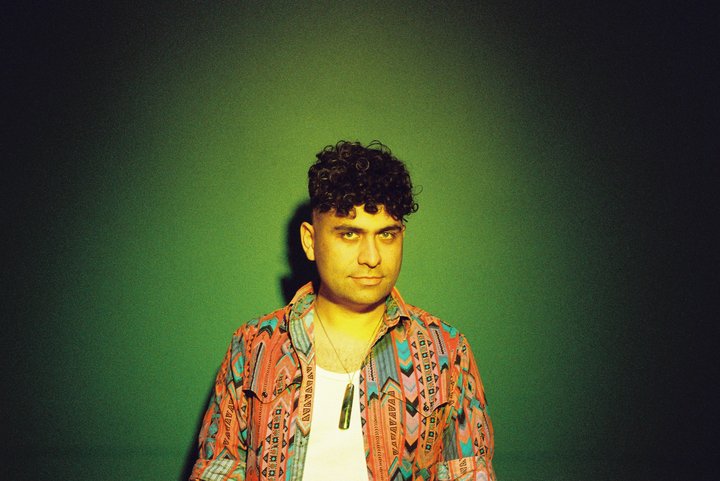
“So many of my collaborators are here in New York now so it’s great to be here and the tours have been going great.
“It’s been wonderful to be able to travel and enjoy summer although the heatwaves were something else – lugging gear through Paris in 40-degree heat was tough.”
Hikurangi shares that his Northern Hemisphere trip also gave him the thrill of being recognised. “I was on a train in London, and someone recognised me. She had come to a gig last year and then came to the show on this tour. That was a bit of a buzz.”
A prominent figure in Wellington's modern improvised jazz and independent music communities, Hikurangi is looking forward to returning to Aotearoa to present Te Ao Kōhatu. The project offers a unique opportunity to bring together his jazz quintet The Unknot, experimental taonga pūoro collective Bub(z) and da Ouncle$, and musician, poet and composer Ruby Hinepunui Solly’s Waitaki lithophone.
“It’s a real honour to be invited to do the commission and it’s been such a reaffirming experience to create this work.
“When I was asked [to do the commission] I had just finished writing my new album, so I was on a bit of a creative roll with writing and looking for thematic material. Ruby made me carry a bag of rocks into the studio which was the lithophone. I had a memory of my father and Eru Potaka-Dewes talking about the fantastical idea of ancestors being descended from the stones themselves. It seemed like such a wild and interesting idea, and that’s where Te Ao Kōhatu has come from.”
The work explores contested whakapapa, cosmogony, and the space between Māori and Pākehā constructions of knowledge, (pre-)history and identity, and at its heart is the lithophone – an instrument consisting of rock or pieces of rock which are struck to produce musical notes.
“The stones aren’t perfectly tuned instruments – they are roughly around a G Major scale, but there is a rawness and edginess to the work.
“I want to challenge the listener and ask people to listen generously. I want this to be a new experience for audiences so they can say they haven’t seen or heard anything like this before… that would make it feel worthwhile for me.”
A key element in instrumental music is that you ask the audience to bring emotional content and context. I want people to really feel something with the music – maybe even experience feelings they can’t describe.
“The critical role of art is not to be didactic or strict about how to interpret what you see or hear, and to provide a lot of leeway for people’s individual interpretation.”
Hikurangi says creating the work has been a mix of scored sections and communicating in written notes to provide the artistic direction for the piece. The eight musicians on stage are an assembly of two ensembles. The Unknot is a modern improvised music ensemble built around drums, double bass, guitar, piano and saxophone, while Bub(z) and da Ouncle$ brings taonga pūoro, modular synth, cello, voice and other textural elements.
“I wanted to bring together the different colours and voices each person brings and I know their interpretations of the music are going to be right for this work. We worked on the piece before I headed overseas, but there is some finishing off to be done.”
“Working this way has pushed me outside my normal process - for some sections I use visual scores so musicians can see the shape and direction. These musicians are so wonderful – they speak my language and they just get it, and that’s where the magic happens when compositional process and artistic direction come together.”
An additional element for the gig will be a suspended sculpture created by Hikurangi’s artist friend Sarah Bookman and reflects his interest in visual arts alongside improvised music.
“It’s still a work in progress, but it is planned to be a light source and reflect the sculptural form around knot theory and The Unknot.”
Te Ao Kōhatu - Hikurangi Schaverien-Kaa is at Wellington Jazz Festival on Sunday 18 October 6.00pm at Tāwhiri Warehouse. Book tickets here
Disclaimer: ARTicle includes a variety of content, including interviews, editorial commentary and links to external sources. The views expressed by interviewees, editors and external sources are their own and do not necessarily reflect those of Tāwhiri, its team, or its partners.