7 May 2026
Described as a “high-risk dance duet”, An Honest Conversation was created by Wellington dancer Sacha Copland in 2021 and this month marks the 21st conversation.
Every performance features two dancers who dance, talk and attempt to be as honest as possible in a completely improvised one-hour duet.
We sit down with Sacha for a chat about honest conversation and bravery in creativity.
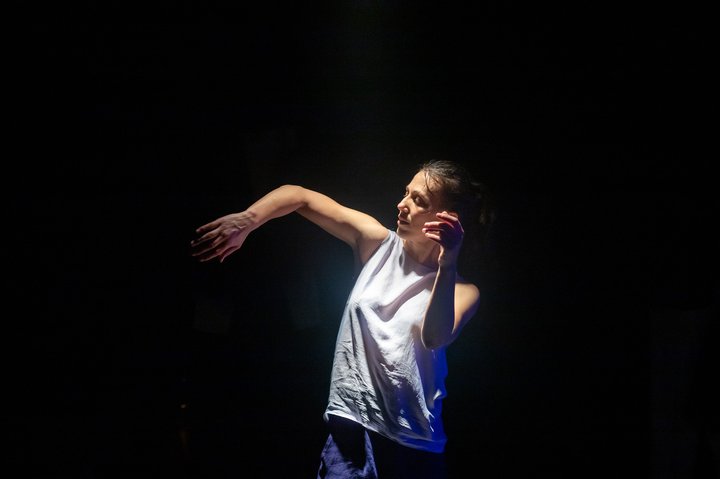
With no rules apart from a one-hour time limit, An Honest Conversation seeks to create space for “the conversations you can never have” and I ask Sacha how she goes about developing the one-hour duet.
“It does start with the participants we invite to take part – we aim to have people who are different to each other is some ways … that may be age, gender, culture, background, sexual orientation or different dance styles.
“We always start and end with a ritual and while that is inspired by Māori tikanga, it can manifest in different ways, but the performance is completely improvised. Neither dancer has any idea what is going to come up in the show – we don’t look to throw anyone under the bus and topics can vary a lot. It can get awkward, and it can be confrontational, but that is what honesty is. These one-on-one conversations are a space for honesty and vulnerability.
“We might have talked a bit ahead of the show about what honesty means, but there is no theme and the provocation really is being honest – in what we say and how we move. Being completely honest isn’t simple and we’re doing it in front of an audience who do hold you to account. It is one of the most frightening things I have done, and I am nervous every time.”
An Honest Conversation has been performed with a range of New Zealand dancers, and Sacha has also taken it into schools and to Australia where she performed with dancers who she had previously only met online.
“One of the most memorable performances was with Sudanese street/hip-hop dancer Azzam Mohamed in Australia. There is no music in the performance but dancing with him it felt like there was – when he moves there’s a pulse, a rhythm to his movement which I will never forget.”
Sacha says while audience participation isn’t part of the performance, the audience is an important component.
“Occasionally an audience member will say something. I think of the audience as a third ‘friend’ in the conversation to bear witness to our honesty. And if we’re not being completely honest, the audience will ‘smell a rat’. Sometimes we may be saying one thing, but our bodies are responding in a different way.”
I ask Sacha if anything has surprised her when she has performed in the An Honest Conversation series. “I have found it confrontational with some demographic groups – for me that’s with heterosexual males. For some reason it’s harder for me to be honest. I noticed that the underlying kind of basic biological factors like differences in physical strength and power and any underlying forces like the tiniest hint of chemistry or complexity in the dynamic made it harder to be honest but played out in our physicality. Having nowhere to hide is challenging!”
Sacha says in today’s world of AI and social media “yelling” at us, art and live performance is more important than ever. “Art has to create spaces for conversations that don’t happen because where else can we have those conversations.
“Art is about bravery – simply stepping out and saying ‘I’m an artist’ is an act of bravery. In today’s world we things which are real – it’s one of the reasons we don’t video the show. Each show is completely unique and it’s as much about the audience in the room as it is about the performers – that is honesty in art.”
An Honest Conversation: Sacha Copland with Tiaki Kerei is on Sunday 10 May at Circa Theatre. Tickets available here. An Honest Conversation will also be presented on Sunday 12 July and Sunday 11 October with guest stars to be announced.
Disclaimer: ARTicle includes a variety of content, including interviews, editorial commentary and links to external sources. The views expressed by interviewees, editors and external sources are their own and do not necessarily reflect those of Tāwhiri, its team, or its partners.