4 February 2026
Celebrated author Dr Rachel Buchanan (Taranaki iwi Te Ātiawa, Taranaki Whānui ki Te Upoko o Te Ika) features in two sessions at the weekend Writer’s programme at the Tāwhiri Warehouse during the 2026 Festival. We catch up with her from her base in Naarm/Melbourne.
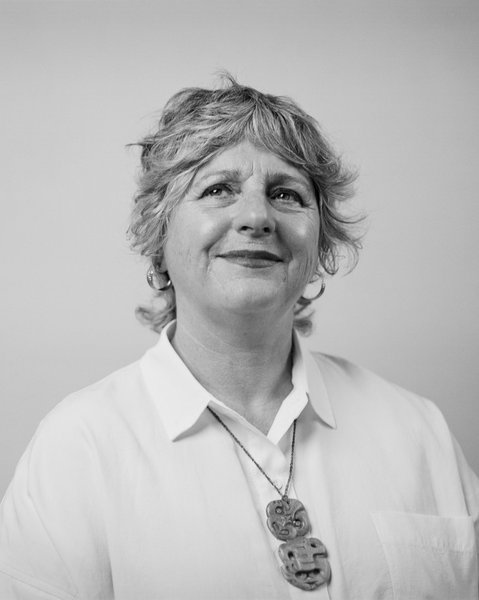
As well as presenting the session Manuhiri – The Many Guises of the Guest, Rachel is joining six other writers for the opening event Letter To My Art Mother. Without giving away too many secrets, I ask her what we might expect from her interpretation of ‘art mother’.
“Let’s just say there’ll be some singing, some waiata. I often warm up for a writing session by singing and dancing, having a strum on my uke. Melbourne alt-country singer Sherry Rich taught me to play so I’d have something to do when I visited my real-life mother, Mary, at Village at the Park in Pōneke.
“Mum was diagnosed with dementia when she was 65 and after five years or so of living with the disease, conversation became a wee bit of a challenge. We’d sing instead. Our favourite was Bananarama’s version of Venus but Mum also really got into These Boots Are Made For Walking, a song made famous by Nancy Sinatra. Parting Glass is a Celtic folk song that’s popular with choirs in Naarm and I sang that one for Mum at her unveiling at Opau, our urupā at Makara. We writers can learn a lot from singers. My art mothers have got good voices.”
Based in Te Moemoeā Australia, Rachel is aware of being away from her home. I ask her how this affects her sense of whakapapa (genealogy) and tūrangawaewae?
“Big question. Whakapapa is fully transportable, luckily. Wherever I go, it’s right there with me, in my body and my spirit. Actually, as the years go by, I feel closer than ever to the old people who made me. Māori, Pākehā, the whole gang. But the question of tūrangawaewae is more complicated. Obviously, I am living on someone else’s country here in Naarm/Melbourne. I live on Bunurong country, I gave birth to my three daughters on Wurundjeri country.
“I’m a long-term manuhiri in Oz and I feel that. I’m very aware of my obligations as a guest. I attended the Day of Mourning rally the other day on Australia Day and it was so cool to hear all outstanding First Nations speakers, luminaries like Professor Gary Foley, Robbie Thorpe and Apryl Day, the daughter of Aunty Tanya Day who died in custody in 2017.
“Apryl spoke about the Dhadjowa Foundation, which she founded to support Aboriginal and Torres Strait Islander families whose loved ones have died in custody. What an incredible wahine toa. I’m fortunate to hold dual citizenship but I’ll never be at home in Australia. But no matter where I am, I can think of Taranaki maunga, I can picture myself there with him and feel like I’m where I need to be.”
Rachel’s session Manuhiri – The Many Guises of the Guest where she will be joined by Paul Diamond (Ngāti Hauā, Te Rārawa, Ngāpuhi) for a Q&A, explores the changing nature of manuhiri. Rachel considers the changes over the years and whether New Zealanders are embracing Te Ao Māori concepts of manaakitanga and whakawhanaungatanga (establishing relationships).
“Colonisation turned hosts into guests and guests into masters of the universe. Mana whenua became manuhiri, people robbed of that most precious gift – the ability to host, to welcome, to offer manaakitanga, to be generous, to care for guests with the best you’ve got. This role swap was part of the dirty magic of colonisation and it’s what my lecture is about, how colonisation broke the rules of reciprocity. Are fishing rights really hospitality rights or hospitality privileges? There’s so much to consider.
“Despite all that’s been lost, it’s amazing how generously Māori communities continue to welcome manuhiri, to care for guests, even when they don't necessarily have a lot of spare money and resources to do so. Look at how marae offer shelter to all after a disaster, for example. Maybe making someone a cup of tea is the most radical form of resistance of all.”
Rachel was the 2025 Judith Binney Fellow, and I ask her to reflect on the impact of the fellowship and what future projects she has on the horizon.
“The Judith Binney Fellowship has been completely transformative for me. I was ready to stop writing. I couldn’t afford it anymore. I didn’t have energy to do my day job for money and then my writing on weekends and days off. I felt totally washed up. The fellowship gave me a year to concentrate on writing and research, and my future project is to complete the collection of essays I’ve been working on and see them published as a book. The tentative title is Wrong Mountain.
“My favourite phrase of the past 12 months has been ‘Thank you Judith!’ I said it out loud a lot. What a historian. What a woman. Ngā mihi nu nui Judith Binney.”
Rachel says she is looking forward to her upcoming visit to Aotearoa to see whānau, enjoy the company of other writers and spend time in the takiwā of beautiful Te Aro Pā.
“I love swimming at Te Aro Beach (Oriental Bay) and walking up and down all the little mountains, Pukeahu (Mt Cook), Pukehinau (Te Herenga Waka is built on it), Ahumairangi and Matairangi (Mt Victoria). I get sore calves but it’s worth it.”
Dr Rachel Buchanan features in Letter To My Art Mother and Manuhiri – The Many Guises of the Guest in the Writers weekend programme taking place during the 2026 Festival at Tāwhiri Warehouse on Sat 7 and Sun 8 Mar.
Disclaimer: ARTicle includes a variety of content, including interviews, editorial commentary and links to external sources. The views expressed by interviewees, editors and external sources are their own and do not necessarily reflect those of Tāwhiri, its team, or its partners.